
4G vs 5G for IPTV: How the Next Generation of Connectivity is Revolutionizing Streaming in 2026
In the world of digital entertainment, the shift from 4G to 5G is not just a minor speed bump; it is a total architectural overhaul. For IPTV (Internet Protocol Television) users, this transition marks the end of the “buffering era” and the beginning of truly immersive, broadcast-quality mobile television.
As we move through 2026, understanding the technical differences between 4G vs 5G for IPTV is essential for anyone looking to optimize their home or mobile viewing experience.
4G vs 5G: The Technical Breakdown for IPTV
While 4G (LTE) brought streaming to our pockets, it was never designed for the massive data loads required by modern 4K and 8K IPTV streams. 5G solves these bottlenecks through four core improvements:
| Feature | 4G (LTE) | 5G (New Radio) | Impact on IPTV |
| Peak Speed | ~100 Mbps | Up to 20 Gbps | 5G allows for seamless 4K/8K streaming. |
| Latency | 30–50 ms | < 1 ms | Instant channel switching and real-time live sports. |
| Capacity | 100k devices/km² | 1M devices/km² | No slowdowns in crowded cities or stadiums. |
| Reliability | Prone to congestion | Ultra-Reliable (URLLC) | Consistent broadcast-quality video. |
How 5G is Revolutionizing IPTV Technology
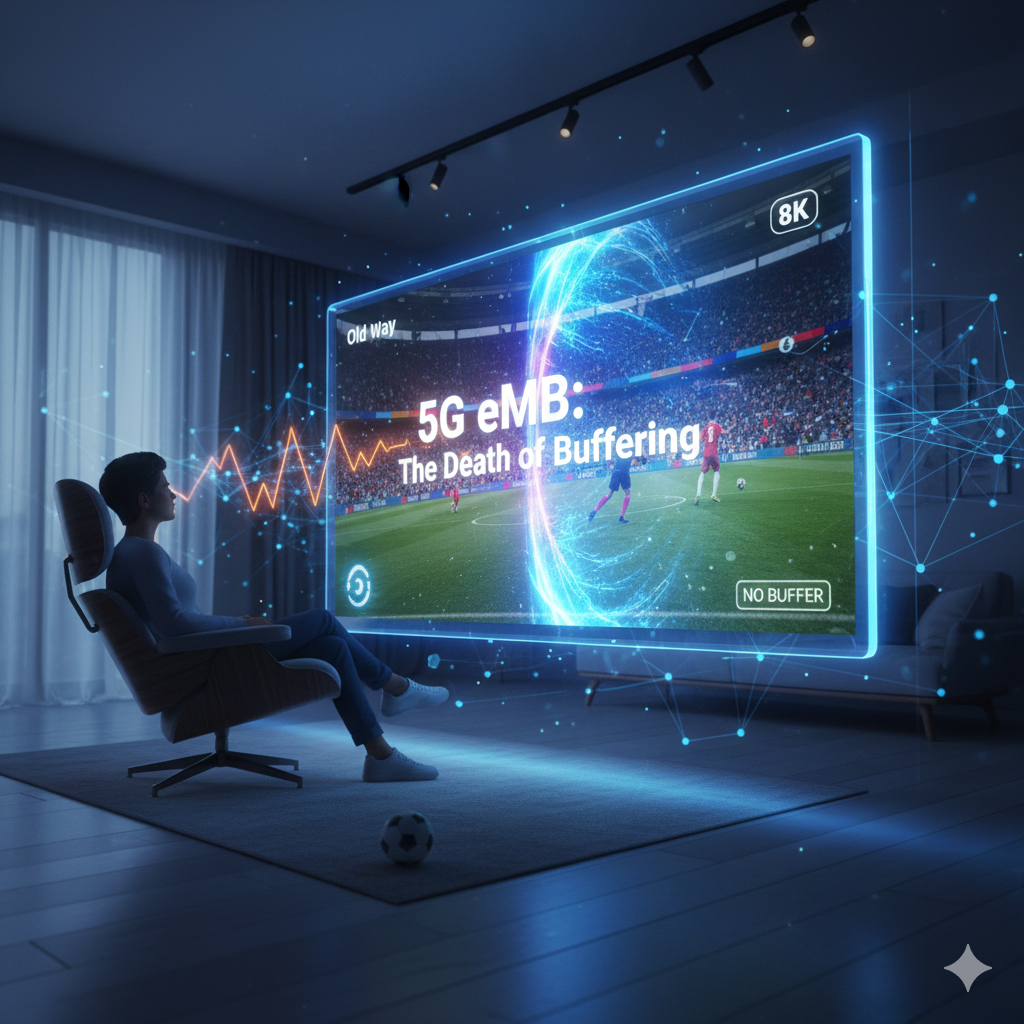
1. The Death of Buffering: Enhanced Mobile Broadband (eMBB)
The primary upgrade 5G brings to IPTV is eMBB. While 4G often struggles with “bitrate drops”—where your 1080p stream suddenly becomes pixelated—5G’s massive bandwidth ensures a steady flow of data. This allows IPTV providers to offer Ultra-HD (4K) and even 8K content to mobile devices without interruption.
2. “Live” Truly Means Live: Ultra-Low Latency
In the 4G era, a “live” football match on an IPTV app could be 30 seconds behind the actual game, leading to spoilers from neighbors cheering next door.
- 5G Latency reduces this gap to nearly zero.
- This enables Interactive IPTV, where viewers can vote in polls, change camera angles, or view AR (Augmented Reality) stats in real-time during a broadcast.
3. Network Slicing: A VIP Lane for TV
One of the most powerful features of 5G is Network Slicing.
How it works: 5G allows operators to “slice” a single physical network into multiple virtual networks. An IPTV provider can have a dedicated “slice” specifically for video traffic. This ensures that even if thousands of people nearby are downloading large files, your IPTV stream remains high-priority and stutter-free.
4. Fixed Wireless Access (FWA): The Cable Killer
In 2026, 5G is replacing traditional physical cables (Coaxial and Fiber) via Fixed Wireless Access. Many households now use a 5G router to power their entire home IPTV system. This eliminates the need for expensive technician visits and digging up cables, making IPTV more accessible in rural and suburban areas.
The Final Verdict: 4G vs 5G for IPTV in 2026
Is 4G obsolete for streaming? The short answer is no, but the gap is widening.
In the ongoing debate of 4G vs 5G for IPTV, 4G remains a vital “safety net.” In 2026, 4G LTE continues to be the reliable backbone for IPTV in rural regions and deep indoor environments where 5G signal penetration is still maturing. Thanks to Adaptive Bitrate Streaming (ABR), modern IPTV apps can switch between 4G and 5G signals seamlessly, ensuring your connection never drops—even if your speed fluctuates.
However, for a premium IPTV experience, 5G is the undisputed winner. If you want to unlock the full potential of your NETPTV subscription—including 4K Ultra-HD, 360-degree VR broadcasts, and zero-latency live sports—a 5G connection is no longer optional; it is the new gold standard.
Frequently Asked Questions About 4G vs 5G for IPTV
Q1: 4G vs 5G for IPTV: What is the main difference in streaming performance?
The main difference lies in speed, latency, and capacity. 5G offers significantly faster download speeds (up to 20 Gbps vs. 100 Mbps), ultra-low latency (<1ms vs. 30-50ms), and much higher network capacity. For IPTV, this means 5G virtually eliminates buffering, enables 4K/8K streaming on mobile, and allows for real-time interactive features that 4G cannot reliably support.
Q2: Will my existing IPTV subscription work better on 5G?
Yes, generally. If your IPTV provider delivers high-quality streams, a 5G connection will ensure you receive the best possible quality (e.g., 4K resolution) with minimal buffering and quicker channel changes. Even if your provider only offers HD, 5G’s stability and low latency will still result in a smoother, more reliable viewing experience compared to 4G, especially during peak usage times.
Q3: Can 5G replace my home internet for IPTV?
Absolutely, and it’s a growing trend in 2025. 5G Fixed Wireless Access (FWA) allows a 5G router to provide high-speed internet to your entire home, including your smart TVs and streaming devices. For many, this is a viable and often more affordable alternative to traditional fiber or cable internet, offering comparable or even superior speeds for IPTV consumption.
Q4: What is “network slicing” and how does it benefit IPTV users?
Network slicing is a core 5G capability that allows mobile operators to create dedicated, isolated virtual networks (or “slices”) within their physical 5G infrastructure. For IPTV, this means your video traffic can be assigned to a specific “slice” optimized for low latency and high bandwidth, guaranteeing a consistent, high-quality stream even when the rest of the network is busy. It’s like having a private, uncongested lane for your TV content.
Q5: Is 4K or 8K IPTV streaming possible on 4G?
While technically possible, reliable 4K or 8K streaming on 4G is challenging. 4G networks typically struggle to consistently deliver the sustained high bandwidth (25 Mbps for 4K, 50-100 Mbps for 8K) required for these resolutions without frequent buffering or downscaling. 5G, with its multi-gigabit speeds, makes 4K and 8K IPTV streaming a seamless reality on mobile and FWA connections.